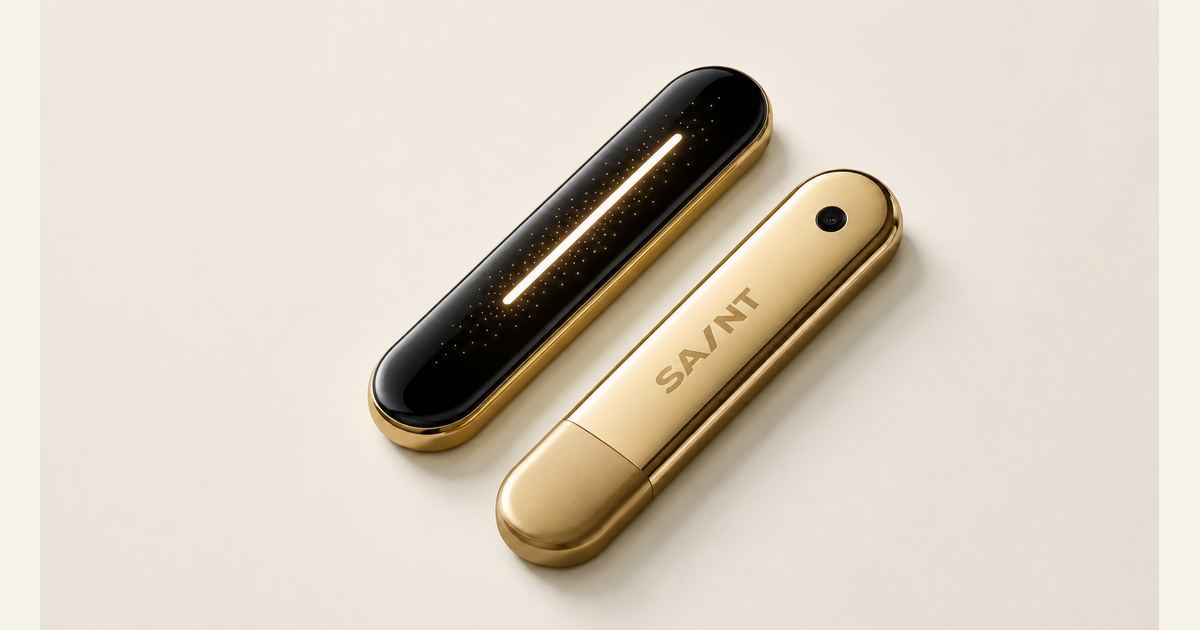
The outline is shared. The cover stays crisp; the lower tub stays soft.
A 4.40-to-one capsule
V4.5 is 127.5 × 29 × 12 mm. Both broad faces use the same R14.5 semicircular plan ends. The Active cover receives only a small production edge break, while the lower Personal tub retains its softer R3.1 roll in section.
The straight light reveal is 57.3 × 3 mm and runs from x = −46.65 to +10.65 mm. The rear camera center shares the −46.65 mm top datum. A render cannot redefine those coordinates.
Camera privacy is part of the architecture
The Founding shell now includes the camera rather than reserving a later cosmetic variant. Capture authority must be physically interruptible, and an outward activity signal must be electrically coupled to camera power authority.
The camera and light occupy opposite faces but overlap in plan, so the placed design requires an opaque baffle, controlled flex routing and light-leak, flare, focus and low-light evidence.
Feasible, with named work still open
The generated component-envelope study closes at architecture level and estimates 67.4 g nominal, with a 62–74 g planning range and a 75 g maximum without strap. The wider central lane helps the cell, modem, PCB and audio stack; the capsule-end antenna keep-out must be shaped or shortened in placed CAD.
USB-C now sits inside a shallow recessed pocket with a carrier load bypass. This is approved design intent—not placed ECAD/MCAD, a released tolerance stack, EVT evidence, supplier authorization or production hardware. Earlier V4.3 orders and qualification records remain historical evidence.